South Korea has long charged for waste according to usage, even before mobile apps existed to assist. The volume-based pricing system, launched in 1995, requires the purchase of standardized bags for non-recyclable trash. The larger the bag, the higher the price.
This mechanism rests on the “pay as you throw” principle, often translated as “pay for what you discard.” The concept works like a water meter: everyone pays a share tied to their actual consumption, instead of a universal charge for all households.
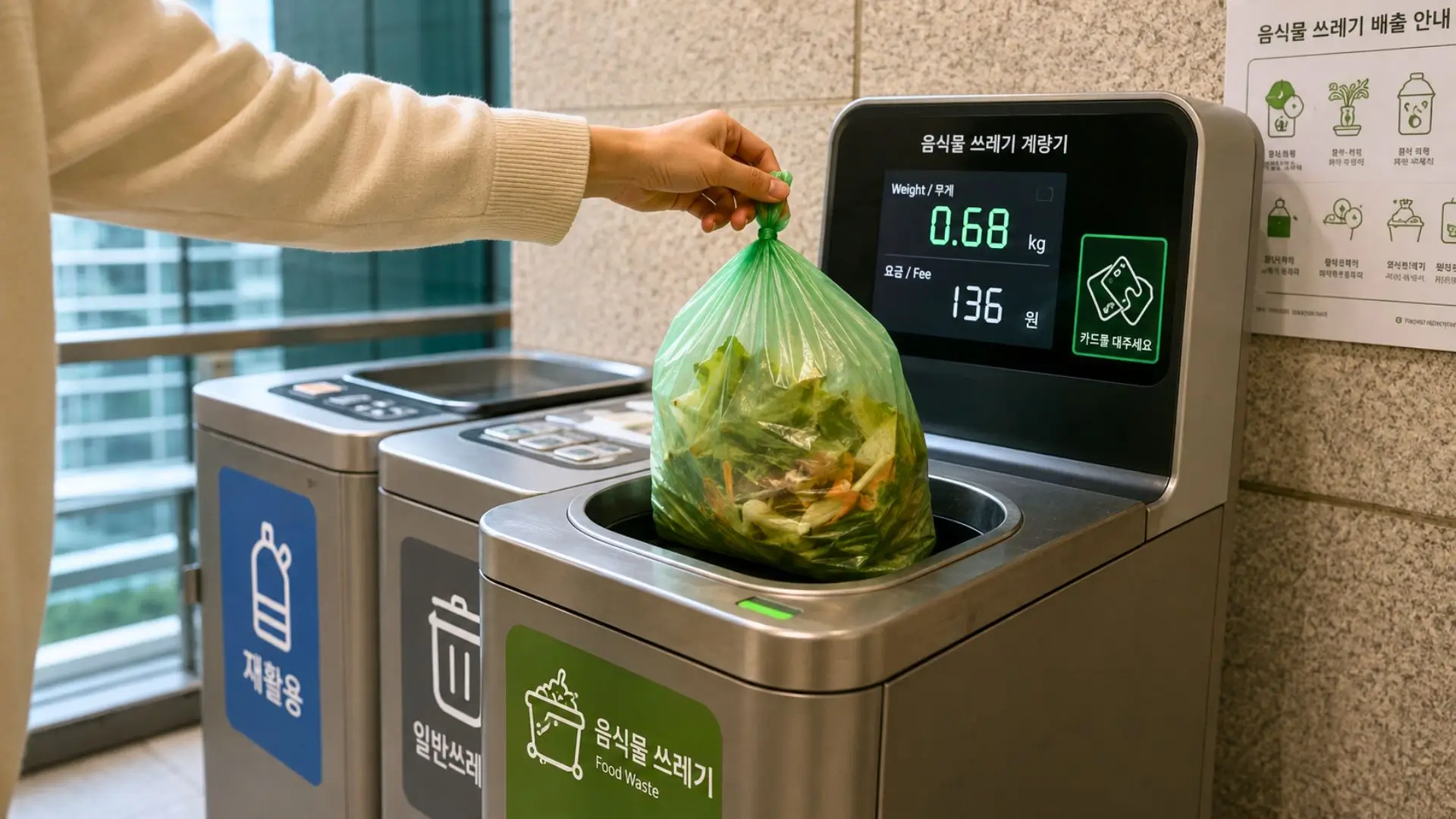
In Seoul, the approach has become more precise for food waste. RFID-enabled kiosks, equipped with a radio-frequency identification chip, identify the household, weigh the scraps, and relay the weight to the building’s bill. The gesture lasts only a few seconds, yet it makes every gram visible.
The Korean principle turns the trash can into a visible daily counter
The result most often cited concerns kitchen leftovers. South Korea banned their disposal in landfills in 2005, then made separate sorting compulsory in 2013. According to figures reported by the relevant Korean ministry, the country now recycles almost all of its food waste.
International press and public actors place the rate at around 96.8% in 2023 for this category. This figure does not come from a magical incentive granted to residents; it results from strict rules, processing infrastructure, paid bags, connected kiosks, and habits built over more than two decades.
Behind the success, the weight-based bill also creates unexpected behaviors
The first tangible effect appears in kitchens. Some residents drain leftovers before disposing of them, since water increases the charged weight. This action reduces treatment costs, but it also reminds us that financial incentives can redirect attention toward daily calculations.
Buildings must also maintain the machines, manage lost cards, and explain the rules to new residents. A single malfunctioning kiosk is enough to complicate the collection. In smaller municipalities, the investment weighs more heavily than in Seoul, where population density makes each unit more cost-effective.
Weight-based sorting can widen gaps. The elderly, households less comfortable with digital tools, or those living in small accommodations have less leeway. When a rule is measured in grams, ease of use becomes as important as environmental performance.
The model inspires abroad, but it cannot be copied like an app
OECD regularly cites South Korea among advanced countries in waste management. The organization also notes that outcomes depend on context. A dense network, clear rules, and outlets for compost, biogas, or animal feed matter as much as the tariff system.
The debate remains lively regarding other waste streams. Reuters recalled in 2024 that Greenpeace challenges official figures on Korea’s plastic recycling. The plastics waste cited in this debate rose from 9.6 million tons in 2019 to 12.6 million tons in 2022.

Contact details
Address:
Farmers Forum,
36, Dominick Street,
Mullingar,
Co. Westmeath,
Ireland
Phone:
+353 (0)44 9310206
Or email us:
For technical issues please check out our FAQ's page or email - [email protected]
For general Queries email - [email protected]
Request to add event to our Calendar - [email protected]
Send us your mart reports - [email protected]
Suggestions and feedbacks - [email protected]
News Items / Press Release - [email protected]
To Advertise on Farmers Forum - [email protected]