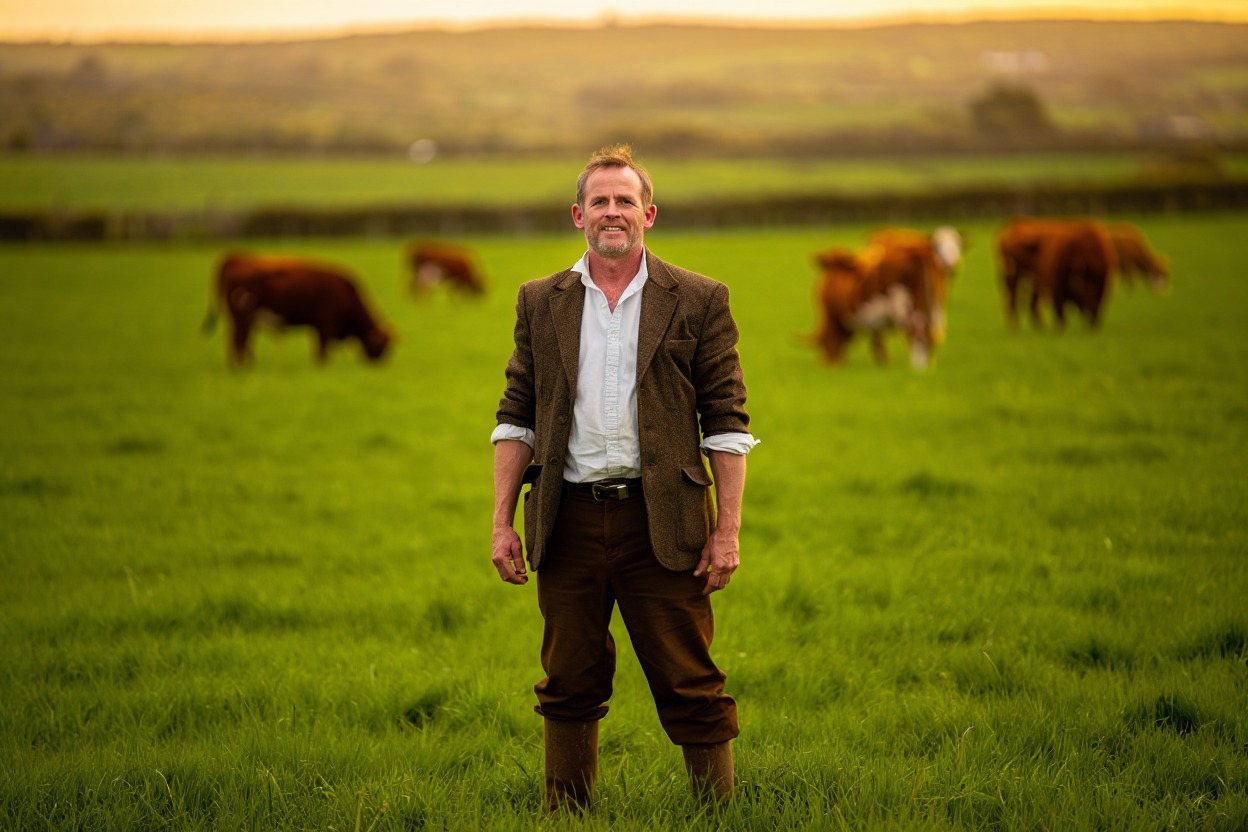
Two years ago, Patrick O’Donnell believed he was about to lose everything. His dairy farm in County Cork had been in the family for three generations, but rising costs and falling milk prices had pushed the business to the edge. What had once seemed like a solid expansion strategy suddenly looked like a dangerous gamble. Within months, the farm was facing insolvency.
Like many Irish dairy producers, Patrick had expanded after quota abolition. He increased herd numbers, leased additional land and invested in new infrastructure. For several years, strong milk prices justified the growth. Then the cycle turned. Fertiliser costs doubled, feed prices surged and interest rates climbed sharply. Margins disappeared almost overnight.
By late autumn, the overdraft was stretched to its limit. Suppliers were requesting payment plans. Cash flow forecasts showed that the farm could survive only a few more months under existing conditions. “I realised I wasn’t farming for profit anymore,” Patrick recalls. “I was farming just to service debt.”
The Moment Everything Changed
Instead of pushing for even greater production to compensate for falling prices, Patrick made a decision that surprised many around him. He reduced herd size. Selling twenty lower-performing cows immediately improved efficiency and reduced feed costs. It also generated short-term liquidity, easing immediate financial pressure.
At the same time, he carried out a full cost review. Purchased concentrates were reduced in favour of tighter grass-based management. Fertiliser use was optimised rather than maximised. Non-essential capital expenditure was frozen. Every expense was questioned, from electricity usage in the parlour to machinery maintenance schedules.
The strategy was simple: protect cash flow first, then rebuild margins.
A Strategic Shift Toward Value
The true turning point came when Patrick began exploring direct sales. Instead of sending every litre of milk to the processor, he diverted a portion into small-scale on-farm production. He started with butter and natural yoghurt, selling at a local farmers’ market. Initial volumes were modest, but margins were significantly higher than standard milk contracts.
Encouraged by early success, he partnered with a nearby café and later a regional food retailer focused on local produce. Consumers responded positively to traceability and authenticity. The farm’s story — a family business fighting to survive — resonated strongly.
Within a year, value-added products accounted for a meaningful share of revenue. The diversification reduced reliance on volatile global commodity prices and stabilised income.
Negotiating with the Bank
Profitability alone did not eliminate debt pressures. Patrick approached his bank with a structured recovery plan. Detailed projections demonstrated improved margins, lower cost exposure and diversified revenue streams. As a result, he secured extended repayment terms and temporary interest-only periods to rebuild financial stability.
The restructuring provided breathing space. More importantly, it restored credibility. The farm was no longer operating in crisis mode but under a disciplined recovery framework.
Technology That Delivered Measurable Returns
Rather than investing in expensive headline technologies, Patrick focused on tools with clear short-term payback. Grass measurement software improved grazing efficiency and reduced feed waste. Basic herd health monitoring systems lowered veterinary costs. An energy audit helped cut electricity consumption in the milking parlour.
Each decision was assessed against a single principle: would it improve net profit within twelve months? If the answer was uncertain, the investment was postponed.
Where the Farm Stands Today
Two years after facing bankruptcy, the farm operates with fewer cows but stronger margins. Debt is being reduced steadily. Cash flow is positive. The business is no longer fully exposed to fluctuations in global milk prices.
Patrick does not describe the outcome as a miracle. Instead, he calls it a reset. “Expansion works when conditions are right,” he says. “But resilience is what keeps you going when they’re not.”
His experience reflects a broader challenge across Irish agriculture. Growth has defined the sector for over a decade, particularly in dairy-heavy counties such as Cork and Tipperary. Yet volatile markets, environmental regulation and rising input costs are forcing many farmers to reconsider what sustainable success truly means.
For Patrick O’Donnell, stepping back was the most difficult decision he ever made. It also proved to be the one that saved his farm.

Contact details
Address:
Farmers Forum,
36, Dominick Street,
Mullingar,
Co. Westmeath,
Ireland
Phone:
+353 (0)44 9310206
Or email us:
For technical issues please check out our FAQ's page or email - [email protected]
For general Queries email - [email protected]
Request to add event to our Calendar - [email protected]
Send us your mart reports - [email protected]
Suggestions and feedbacks - [email protected]
News Items / Press Release - [email protected]
To Advertise on Farmers Forum - [email protected]