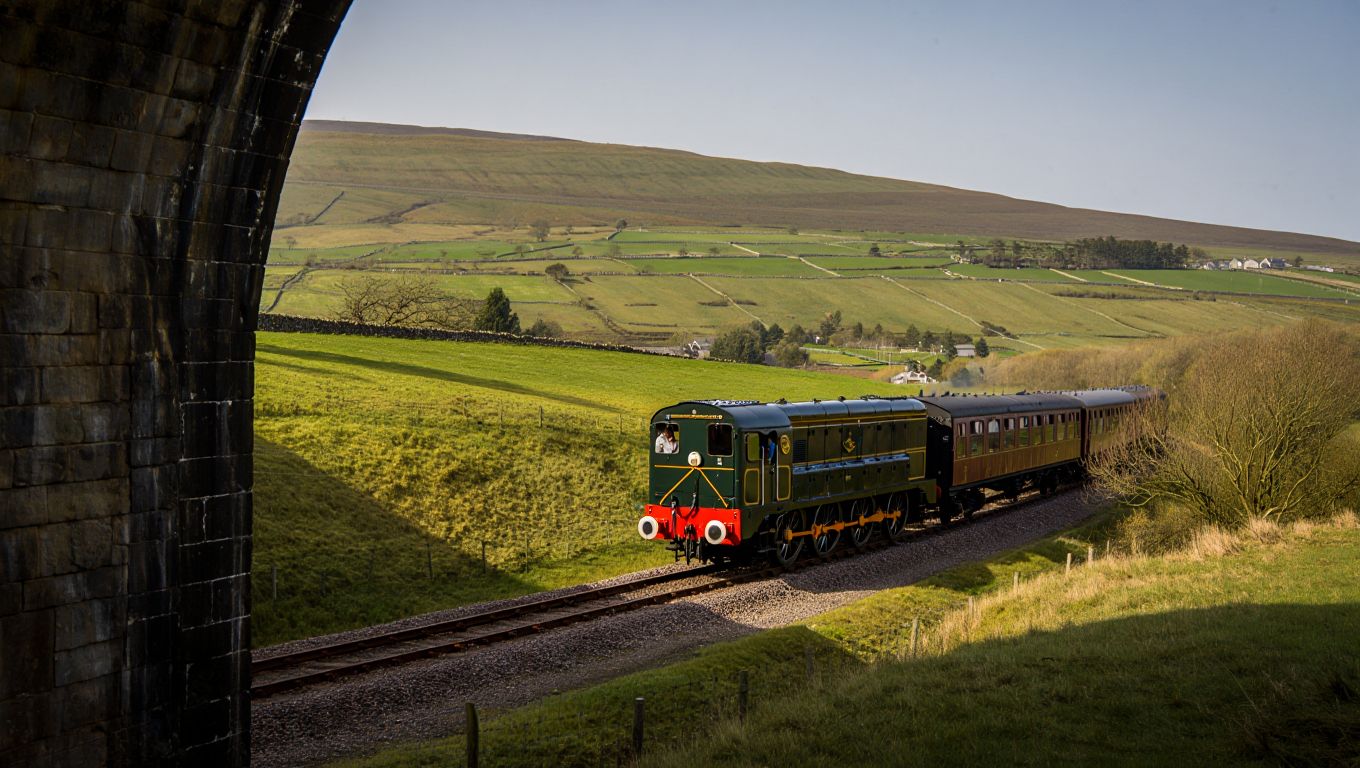
The air in Ireland turns soft in August. Fields look painted, sea light goes metallic, and somewhere on the island a century-old locomotive exhales a first, velvety breath. You board, the whistle bites, and the day arranges itself around iron, steam, and a promise: nine tunnels, six viaducts, and the kind of journey that rearranges your sense of distance.
A ribbon of coast, a braid of hills
This is a route where granite meets tide, where rails edge cliffs before slipping inland to chase rivers and old parish boundaries. The train threads nine tunnels, each one a cool intake of night, and takes six viaducts in stride, each a lifted heartbeat over water or valley. It feels both theatrical and effortless, as if the landscape rehearsed every curve for a century.
“Every tunnel is a full stop,” a volunteer guard murmurs, “and every viaduct is a new sentence.” You look down to see glinting shallows, up to find flocks flipping like loose paper in sky-wind, and forward to a small window of future carving itself clear.
One of Europe’s elder engines, still game
The star is not just the route, but the machine: a burnished, veteran steam engine kept alive by a stubborn community of Irish craftspeople. It is among the continent’s oldest serviceable mainline locomotives, a survivor that treats August like harvest, gathering passengers, stories, and small astonishments into its tender.
“Old iron speaks,” a driver likes to say, hand on a warm brass valve. “You learn its moods, and it learns your patience.” The boiler hums, rods sparkle, and the whole train becomes a metronome for the day, measured in telegraph posts and sea.
Nine tunnels, nine small disappearances
The tunnels land one by one, stitched into sea headlands and hill spines by masons who placed stone the way poets place words. Each entrance is a dark eyelid. Inside, there’s the honeyed glow of carriage lamps, a dense perfume of coal, the gentle clatter that feels like rain on a tin roof. Then a white blink of daylight—fields sprung with hay bales, a harbor speckled with little boats—and the world returns brighter for the brief absence.
You begin to crave the rhythm: light, shadow, light. Faces tilt to windows; conversations fade to whispers as the train swallows another neat ellipse of night.
Six high steps over water and wind
The viaducts are feats of belief, arcs and lattices that still shrug off distance with grace. From the car, rivers stretch into slack-tide mirrors, then ripple at the engine’s distant thrum. You glance down through girders and get a friendly shiver, aware of the clever geometry holding you up.
“Bridges are where you finally trust the journey,” says a historian riding coach class, flipping through penciled notes. “You look out and realize you’re being carried by other people’s courage.” On one span, swans scribble white lines on green water; on another, wind combs heath like an animal exhaling.
August is the perfect host
Late summer in Ireland is generous. Mornings break clear, afternoons invite sea haze, and evenings mellow into pub-lit gold at a rural halt. Hedgerows are talkative with blackberries, and hills tin themselves with heather. The timetable feels forgiving, the crowds a touch more cheerful, the light long enough to make every photograph a small kindness.
How to ride it without rushing it
Tickets for heritage runs often sell quickly, nudged along by nostalgia and scarcity. Book early, bring soft layers, and keep your day a little loose. There’s room aboard for both the hobbyist with a camera strap and the wanderer with a pocket map and no firm destination.
- Reserve seats well in advance, choose a window on the sea-and-hills side, pack earplugs if you’re sound-sensitive, carry cash for the on-board tea and scones, and plan a late supper near your return station.
Small stations, large feelings
At halts, station clocks look unhurried, enamel signs glow like old porcelain, and porters swap the kind of crisp banter that makes a platform breathe. Children count carriages, grown-ups count memories, and the engine stands, a patient animal ticking as if it has swallowed time and means to keep it.
A passenger near the doors says, “I didn’t come here to be moved. I came here to move with something.” Heads nod, and somewhere, a kettle finds its song.
What you’ll carry home
You step off holding the outline of nine shadows and six airs, the steady grammar of rail under foot, and that soft astonishment that lingers when a place has shown you its sinew. Your clothes keep a thread of smoke; your phone keeps a ladder of small films; your mind keeps the calm architecture of bridges and the wink of tunnels.
August will turn the page, as it does, but this day will keep reading you, line by line. And one morning, far from the island, you’ll hear a kettle click, see light tilt at a familiar angle, and feel the old engine cough to life again—warm, willing, and wonderfully near.

Where can we find and book this train
Good Morning
Could you please send me information on where I can purchase tickets for what would be an amazing journey.
Dates
Route
And any other information you think I would need.
Thank you, and I look forward to your reply
Regards
John
Where can you book the train and why don’t you give more precise details
I have no idea where this journey starts and finishes.
Anyone know where to book? What a silly way to advertise
another good article spoiled because of a lack of basic imformation such as where this wonderfull journey starts and finishes and how to book a trip on it . 3rd article i have read from this source this week with NO MENTION what so ever of place names ,contact numbers or even what area these places are .
remember the old mantra LOCATION LOCATIO LOCATION !
Why is there no basic information such as date,time leaving from, arriving at as well as return info. A good story ruined for want of details
Where is this magical railway and how is one expected to book without any relevant information. All I know is that its on the coast and may be in the North East of Ireland . Its a joke of an article.
This would be a dream trip for me, why are there no details given ? We can’t book early if we don’t know where to book, it’s almost July and I get from this article that it’s happening in August, not much time to book anything early
Sounds like the east coast line to Rosslare
He hasn’t written numerous vague articles which give very little information. It’s click bait
On the coast of County Down but I am also interested to learn more . Im here in Toronto on vacation from Ireland.
Clickbait or a poor oversight ??
I know Ireland quite well and Ive never heard of it…
I think its the latter…..
All these lovely train journeys but again no details of what part of the country these start or how to book the train. I think this is all fantasy click bait. I know there are regular train events held in Ireland mostly diesel train and a couple of Steam train events every year.
This is just fiction!