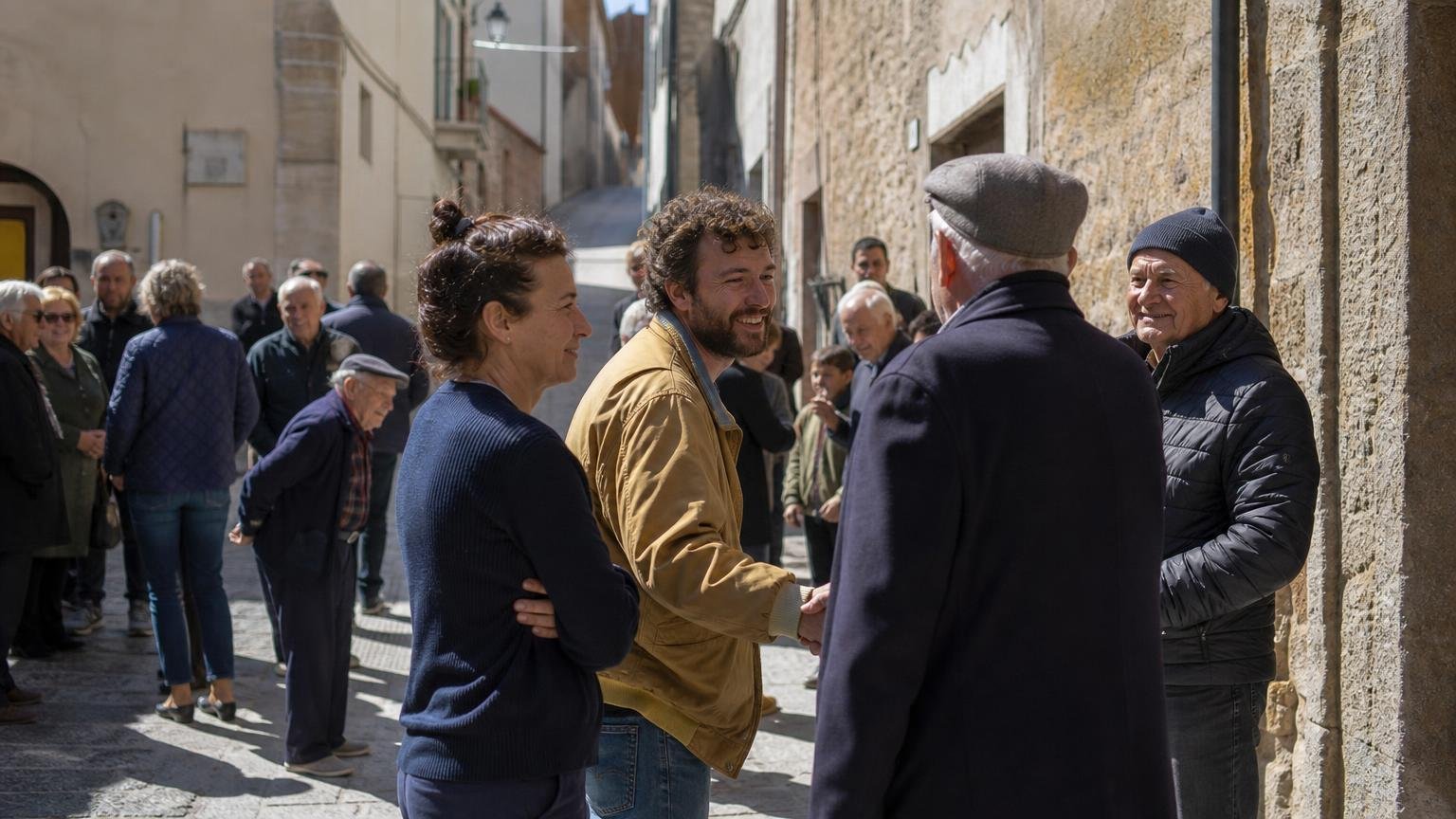
The first afternoon they rolled into this forgotten corner of Italy, a sun-faded Panda clattered up the lane and a bell rang from the church. Within minutes, faces appeared at windows, dogs trotted behind, and someone pressed still-warm bread into their hands. “We thought three people might wave,” says Aoife, laughing, “but it felt like the whole village arrived at once.”
They are two years in now, the Gorey couple who swapped sea-salted Wexford winds for Molise’s terraced hills. The adjustment was slower than a Sunday, but deeper than a holiday. “You live more piano, more present, more local,” says Cian, “and the days stretch out differently.”
Finding a place that doesn’t shout
Molise doesn’t advertise itself; it whispers. The roads are quiet, the apricots abundant, the maps a little vague. Friends in Ireland said, “Where exactly is that?” and the couple just smiled. “We wanted somewhere unobvious, somewhere that would teach us,” says Aoife. “Molise is patient like that.”
They rented the first winter, listened to the dialect, learned when to carry cash and when to say basta. “By spring we knew where the sun hits the windows and where the tramontana sneaks in,” says Cian. “That’s when we chose our house.”
Keys, bells, and bureaucracy
Buying was part paperwork, part pageant. The notary shuffled deeds like a magician; the geometra pointed at a beam with a smile that meant “fix this.” On the steps outside, an old man lifted a demijohn and said, “For the first toast.” The cork popped, the alley cheered, and someone pressed basil into their palms.
“It was wildly human,” Aoife says. “No one asked about square footage. They asked our names, our parents’ names, and whether we liked cicoria.” She nods toward the garden. “Now we grow too much of it.”
Learning the rhythm of hills
Days here have seasons inside them. Morning swirls with espresso steam, noon flattens the olive leaves into silver, and evening brings the clink of cups in the piazza. “The church clock refuses to be perfectly on-time,” says Cian, “and nobody seems to mind.”
In September, harvest becomes a verb. Neighbors call, and you walk into a vineyard that isn’t yours but also kind of is. Grapes stain your hands and a nonna says “mangia, mangia” as she tucks cheese in your pocket. “You earn your supper here,” Aoife says, “and the stars feel closer after.”
Work that fits the map
Cian consults remotely, headphones on, a swallow’s nest above his screen. Aoife translates labels for a cheesemaker and photographs storm-bent walnut trees. “We don’t earn big,” she shrugs, “but we spend on time, not things that need dusting.”
They fixed the roof slowly, learned lime plaster, and argued with gravity on a ladder that remembered the Seventies. “DIY in Italy is part theatre, part therapy,” Cian jokes. “You cry a little, then you sing.”
Hospitality without hashtags
There’s a generosity that arrives unannounced and hungry. A neighbor knocks with wild asparagus and leaves before you can thank her. Another brings a boot mat and says, “For the mud.” “People notice what you need before you do,” Aoife notes. “It’s humbling, and it’s loud with kindness.”
On a Wednesday, the barista slides two amaretti and says, “For the new Molisani.” On a Friday, the butcher whispers which sausage is freshest. “Every small exchange becomes story, and the stories accumulate,” Cian says.
What they miss, what they don’t
They miss spontaneous sea swims at Ballymoney, and the familiar swing of English everywhere on the wind. They do not miss traffic, box-store Saturdays, or the calendar filling itself by accident.
“Back home we were always in a hurry,” Aoife admits. “Here, you set a slower clock, and life arrives when it’s ready.” On hard days, she walks to a crumbling watchtower and lets the view quiet her.
Costs, gains, and the middle space
Renovation ran over, because old walls keep secrets. Paperwork was opaque until a neighbor marched them to the municipio and scolded a clerk like a beloved niece. “There’s friction,” Cian says, “but the friction makes the spark.”
What they gained lives in little drawers: a jar of oregano tied with twine, a phone full of numbers that answer on Sunday, a set of keys that jingle like small bells. “The place makes you useful,” Aoife says. “And being useful is its own kind of home.”
For anyone tempted to follow
They tell friends not to chase a postcard, but to court a place that courts them back. Their counsel is practical and tenderly won:
-
Learn the first ten local phrases and use them daily, even if your accent is hilarious.
-
Rent for a season before you buy, and watch how the light and the wind actually move.
-
Find one elder and one plumber; if they like you, the village will decide you’re staying.
-
Budget 30% extra for repairs, and double the time you think you’ll need.
-
Bring a skill to share, even if it’s just baking bread on a rainy day.
At dusk, swallows sew the sky shut and the couple lean on the wall that became their anchor. “We came for quiet,” says Aoife, “and found a place that talks to us.” Cian nods toward the lane, where a neighbor waves with a courgette the size of a baton. “Some welcomes last a day,” he says, “and some keep arriving, like harvest after harvest.”

Contact details
Address:
Farmers Forum,
36, Dominick Street,
Mullingar,
Co. Westmeath,
Ireland
Phone:
+353 (0)44 9310206
Or email us:
For technical issues please check out our FAQ's page or email - [email protected]
For general Queries email - [email protected]
Request to add event to our Calendar - [email protected]
Send us your mart reports - [email protected]
Suggestions and feedbacks - [email protected]
News Items / Press Release - [email protected]
To Advertise on Farmers Forum - [email protected]